
Redesigning the Mobile
Banking Experience for
India's No.1 Bank

The Team & My Role
Led end-to-end design for the project, managing a multidisciplinary team and collaborating closely with cross-functional stakeholders across the organization
Internal
- Role
- Lead Designer
- Design Team
- 5 Product Designers
- Motion & Illustration
- On-demand specialists
- Project Manager
- Delivery & Coordination
Client
- Product Team
- Requirements & Prioritisation
- Engineering Team
- Feasibility & Implementation
- Experience Design Team
- Alignment & Collaboration
- C-Suite
- Workshops & Strategic Direction
The Challenge
Bridging the gap between digital capability and modern user expectations for 12 crore users
HDFC Bank has long been a digitally progressive institution, but its mobile experience had not kept pace with evolving user expectations and advancements in the ecosystem. Key journeys presented opportunities to reduce friction, improve accessibility, and create a more cohesive, modern experience.
-
Fragmented user base. We need to bring bank branch users and net-banking users to the mobile app. Only 50% of HDFC Bank users use the mobile app"
— Chief Digital Officer -
There's too much friction when it comes to making transactions. Core payment functionality like recurring payments and UPI are missing"
— Product Team representative -
Users are highly dependent on the Customer Support Team, overwhelming the support function. We need the app to be self sufficient, and more user friendly"
— Customer Support Team representative
Research & Discovery
Direct user access was limited, so we triangulated insights through stakeholder interviews, workshopping, and competitive benchmarking.
- Stakeholder interviews across customer support, product, engineering, and branch operations
- Workshops with leadership to align on vision and principles
- Strategic benchmarking (best-in-class products like Airbnb, Uber)
- Tactical benchmarking (banks, fintech apps, neo-banks)
Insights
Key product and experience gaps impacting adoption
-
Insight 1
High-frequency actions like payments were not optimized for speed or accessibility, increasing reliance on alternative apps.
-
Insight 2
Users depended on customer support for basic tasks, indicating gaps in product clarity and self-sufficiency.
-
Insight 3
User segments were fragmented across channels (branch, NetBanking, mobile), limiting adoption of the app as a primary interface.
-
Insight 4
Discovery of new and existing products was limited within the app, suppressing cross-sell and engagement.
-
Insight 5
Onboarding and access flows introduced uncertainty, causing drop-offs before users experienced value.
-
Insight 6
The existing design language lacked consistency and modern appeal, impacting trust and competitiveness with fintech products.
-
Insight 7
There was a gap between HDFC's digital capabilities and how effectively those capabilities were surfaced to users.
-
Insight 8
Poor UX copy and a lack of strong brand voice led to many errors and confusion.
Constraints & Guardrails
Balancing usability with compliance, trust, and system realities
-
Regulatory Compliance
Key flows like onboarding, authentication, and data access had to meet strict regulatory requirements, limiting how much friction could be removed.
-
Security & Trust Sensitivity
Users were cautious about sharing personal and financial information, requiring clearer communication rather than reducing safeguards.
-
Existing Mental Models
Users relied on familiar banking patterns, making it important to align new interactions with established expectations.
-
System-Driven Dependencies
Backend processes such as customer data fetching and device binding constrained how certain flows could be simplified.
-
Diverse User Base
The experience needed to work across varying levels of digital literacy, requiring clarity, guidance, and reduced cognitive load.
Process Artefacts
Supporting research and exploration
-
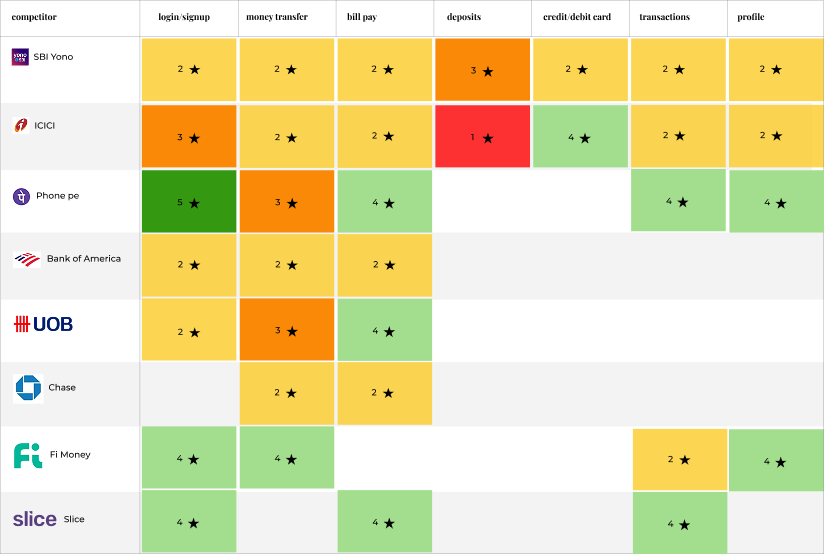
Competitive Benchmarking
-
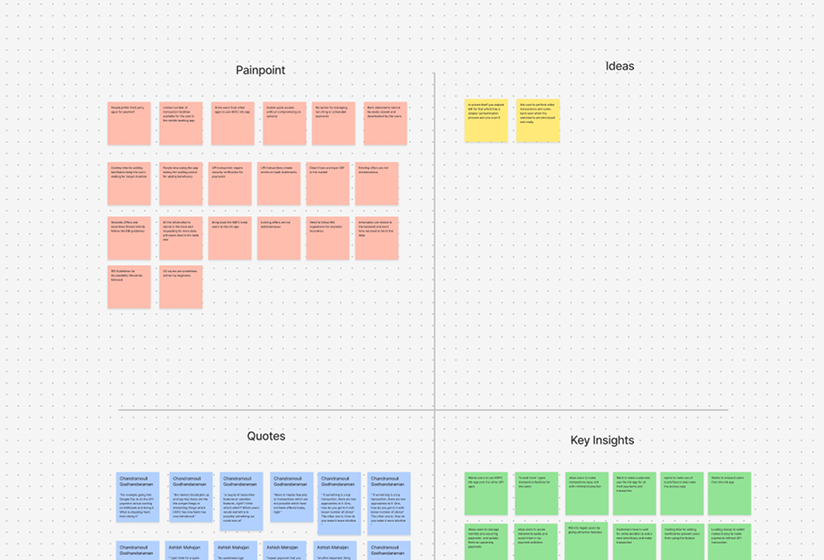
Discovery Workshops
-
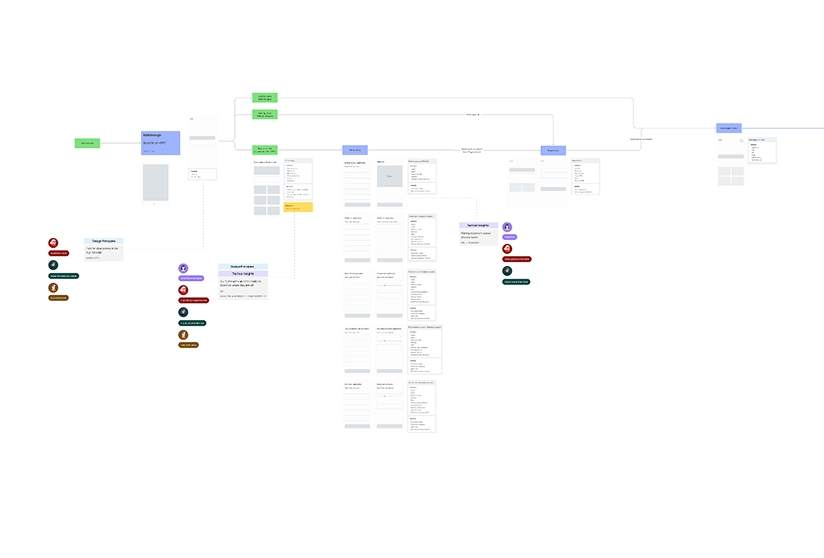
Information Architecture

Users
Designing for a diverse and fragmented user base
Through stakeholder interviews and internal research, we identified distinct user behaviors and needs across HDFC's customer base. These patterns helped us simplify complexity into clear user segments that directly informed key product decisions.
-
Digitally Active
Comfortable with fast payments and expect minimal friction
Enabled fast-access features like pre-login UPI and reduced interaction steps.
-
Low-Confidence / Assisted
Depend on support and need clarity in flows
Shaped guided onboarding, contextual help, and transparent permission flows.
-
Existing but Inactive
Already bank customers but not mobile users
Influenced multiple registration methods and inclusive access.
Strategy
Defining product bets and design principles to guide the experience
The research revealed systemic gaps across onboarding, access, and core journeys. We translated these into a set of product-level bets and guiding principles to improve activation, engagement, and long-term adoption.
Product Bets
-
Reduce friction at entry
Improve onboarding completion and activation
-
Enable self-sufficient usage
Reduce dependency on support
-
Unlock existing user base
Increase activation without new acquisition
-
Increase frequency of use
Drive engagement through faster access
-
Establish a scalable design foundation
Improve consistency and long-term usability
Design Principles
-
Deep Empathy
Design with a clear understanding of user context, constraints, and behavior — especially in high-stakes financial interactions.
-
Progressive Inclusivity
Create experiences that work across varying levels of digital familiarity, access, and confidence.
-
Positive Surprise
Introduce moments of delight within functional flows to make the experience feel engaging and human.
-
Evolve & Adapt
Continuously evolve patterns and interactions to meet changing user expectations and technological advancements.
-
Simplicity
Prioritize clarity and ease of use, reducing complexity in critical journeys to enable faster, more confident actions.
These principles and bets guided decision-making across the entire product.
Product Decisions
Shaping core journeys through key product decisions
-
Decision 01
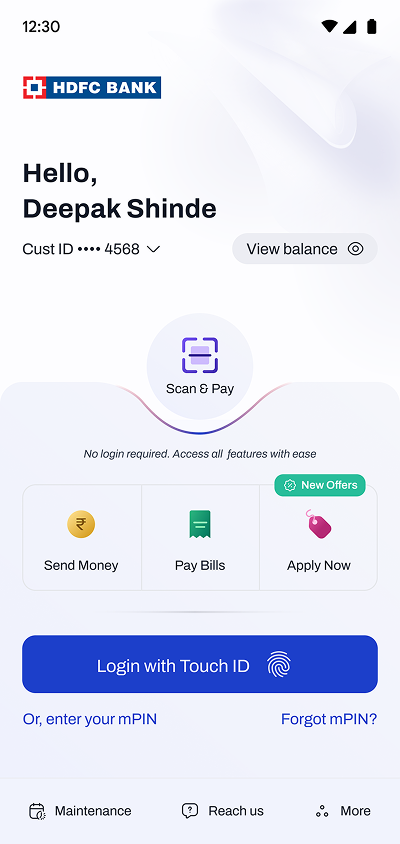
Transactions without login
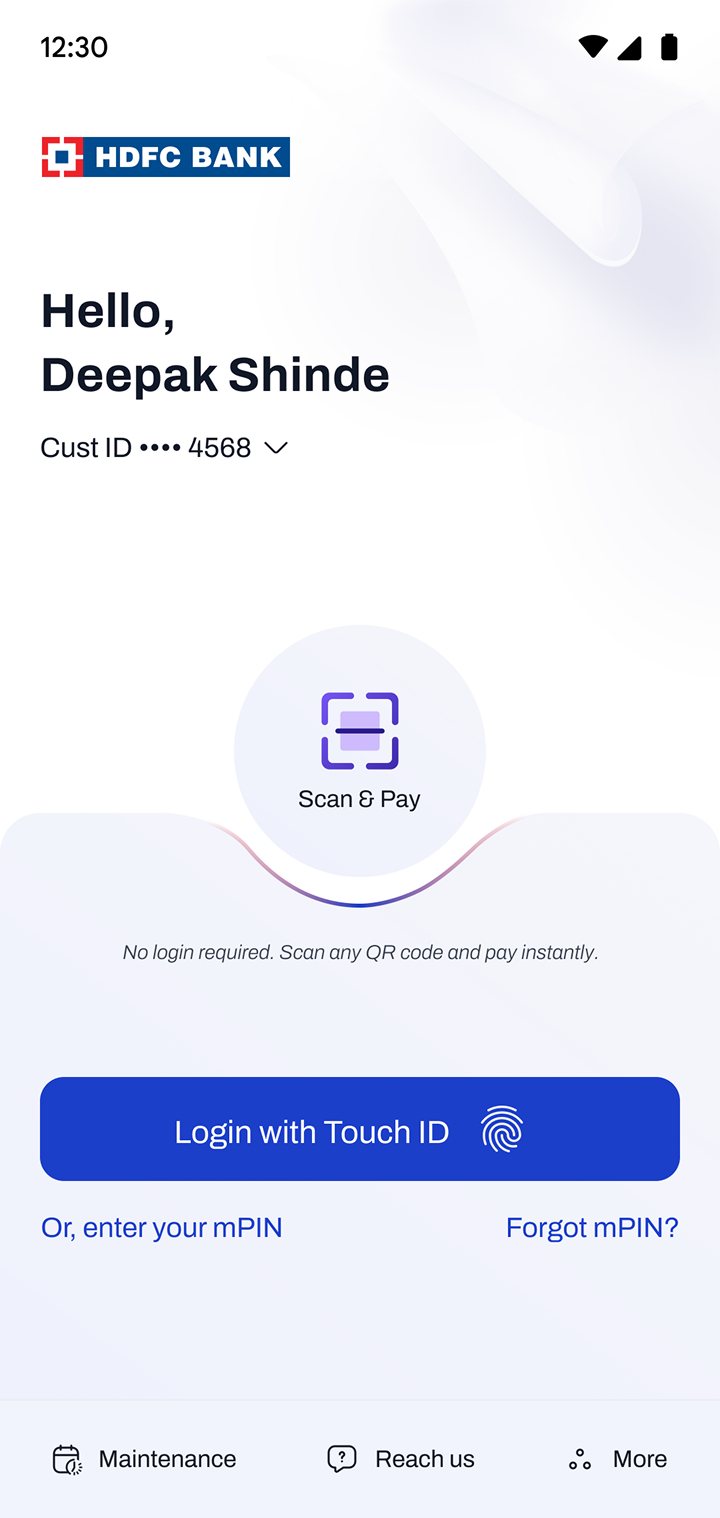
We had to make a trade-off between security and ease of use. Existing solutions — wallets and biometric login — still required authentication. We went ahead with full transactions without logging in. HDFC Bank became the first bank to introduce this, greatly strengthening its value proposition against GPay and other UPI apps.
Business Intent
- Transactions per User (TPU)
- DAU / MAU Stickiness Ratio
- Time to First Transaction (TTFT)
-
Decision 02
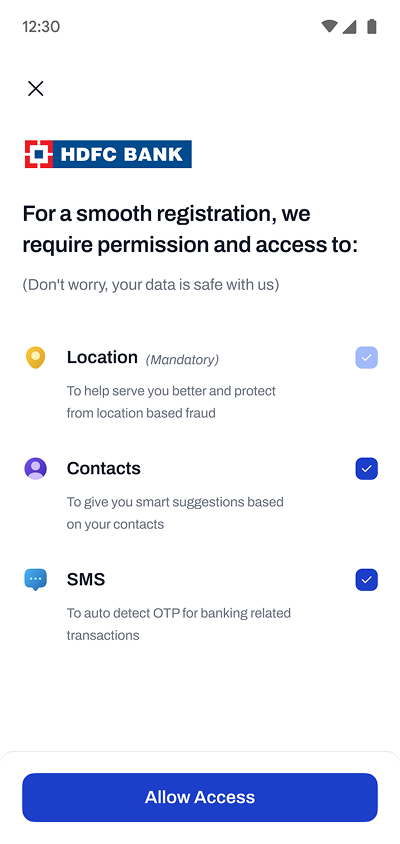
Thoughtful permissions
Permissions were system-driven interruptions with no context, causing hesitation in a high-trust environment like banking. Users felt a loss of control. We reframed permissions as transparent, user-driven decisions — balancing critical requirements with trust and choice.
Business Intent
- Permission Acceptance Rate
- Permission Step Drop-off Rate
- Feature Activation Rate (UPI, Contacts)
-
Decision 03
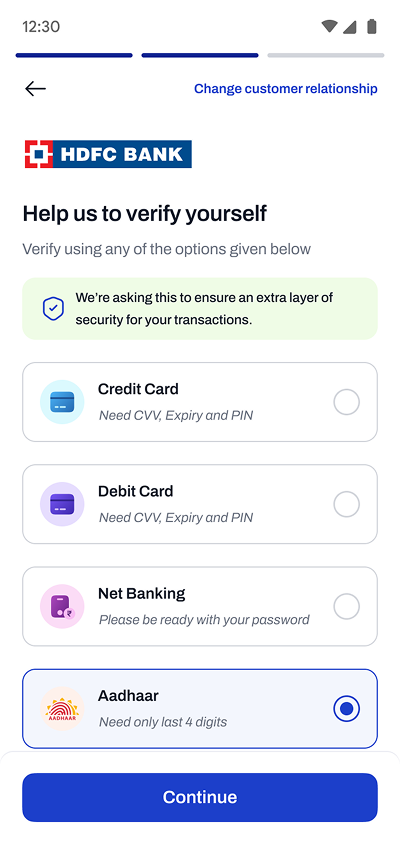
Multiple verification methods
Registration relied on fixed credential-based flows. When required information wasn't available, users dropped off and abandoned entirely. We introduced a flexible approach letting users choose their easiest path and recover from errors without exiting the flow.
Business Intent
- Registration Completion Rate
- Mid-Funnel Drop-off Rate
- Account Activation Rate
-
Decision 04
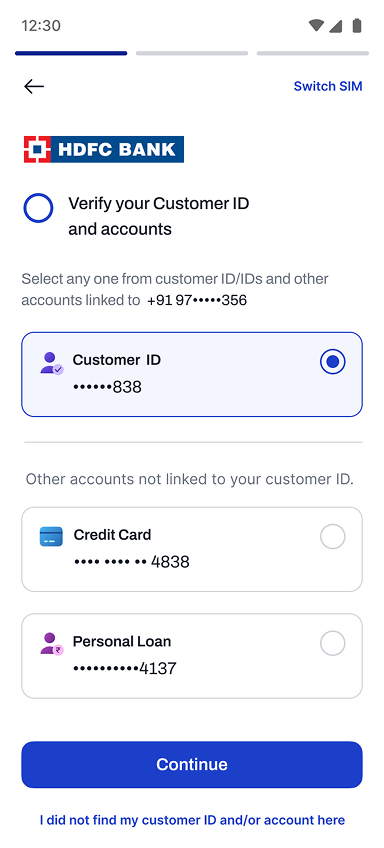
Inclusion of legacy users
A large portion of existing customers used NetBanking, credit cards, or branch services — with no seamless path into the app. We unified entry points so existing users could transition without additional friction.
Business Intent
- Activation Rate (Existing Customers)
- Customer Acquisition Cost (CAC)
- Products per User (Cross-sell Rate)
-
Decision 05
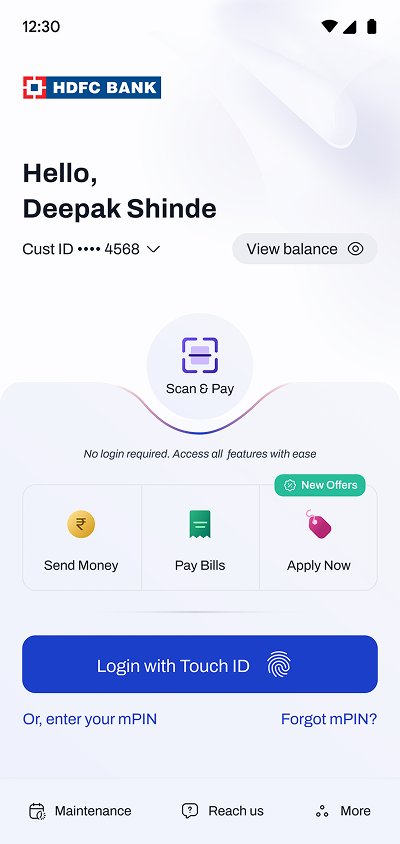
Adapting to different user needs
A single interface couldn't serve both confident and low-confidence users effectively. We introduced Simple and Power versions of the pre-login experience — letting users choose during registration with the flexibility to switch later. Same product, two levels of complexity.
Business Intent
- Feature Engagement Rate (Segment-wise)
- Sessions per User
- User Retention D/D
Pre-Login / Power 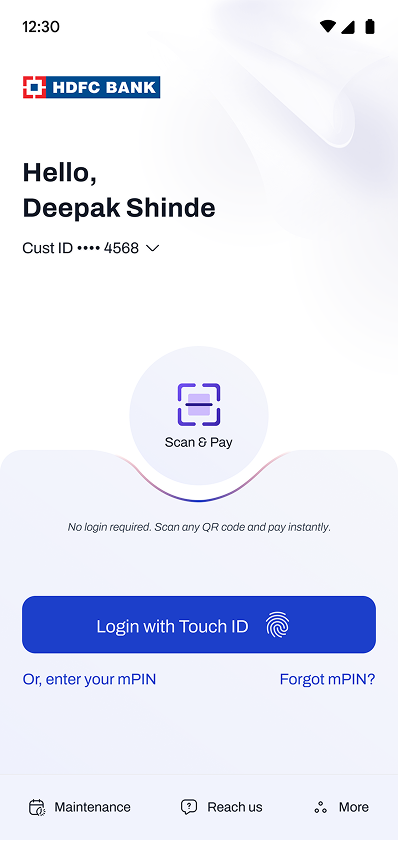
Pre-login / Simple

-
Decision 01
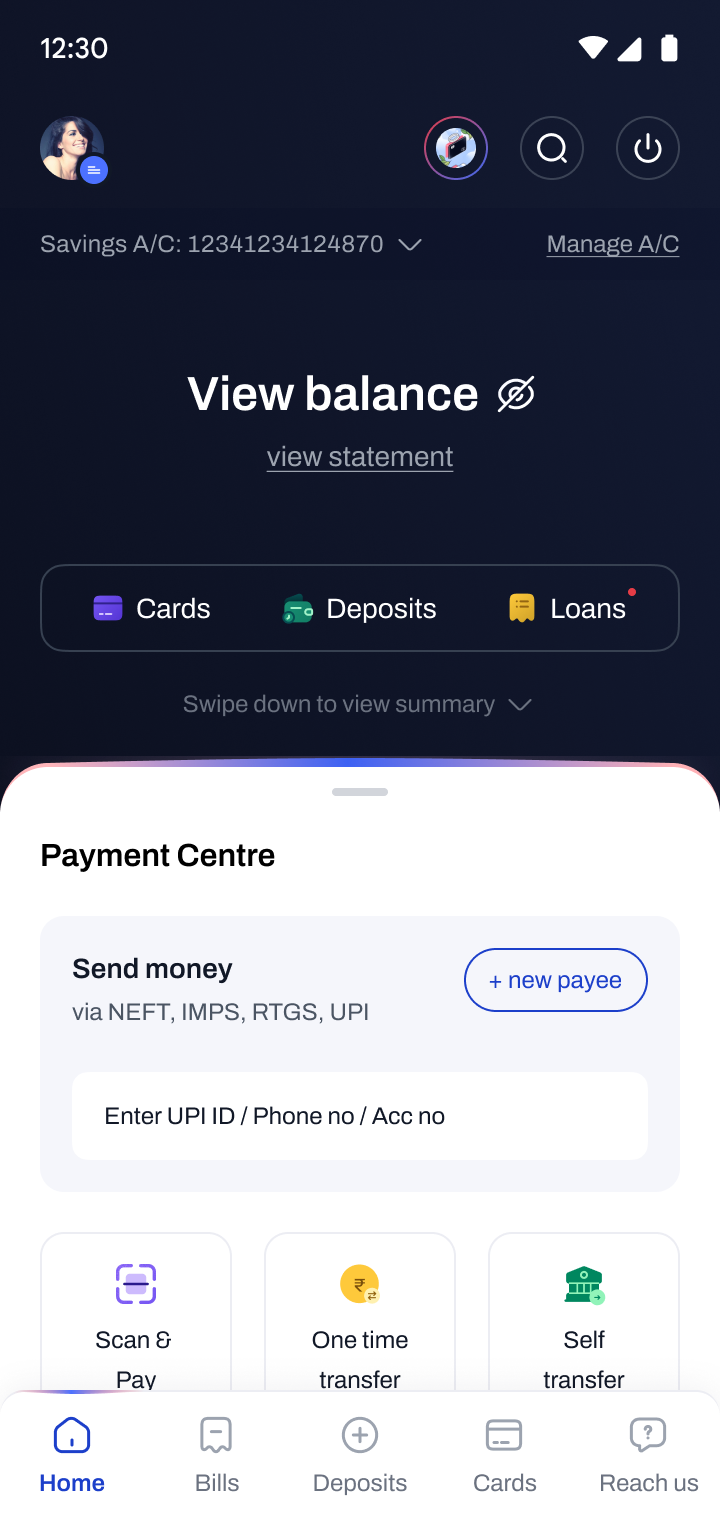
Key revenue drivers given highest priority
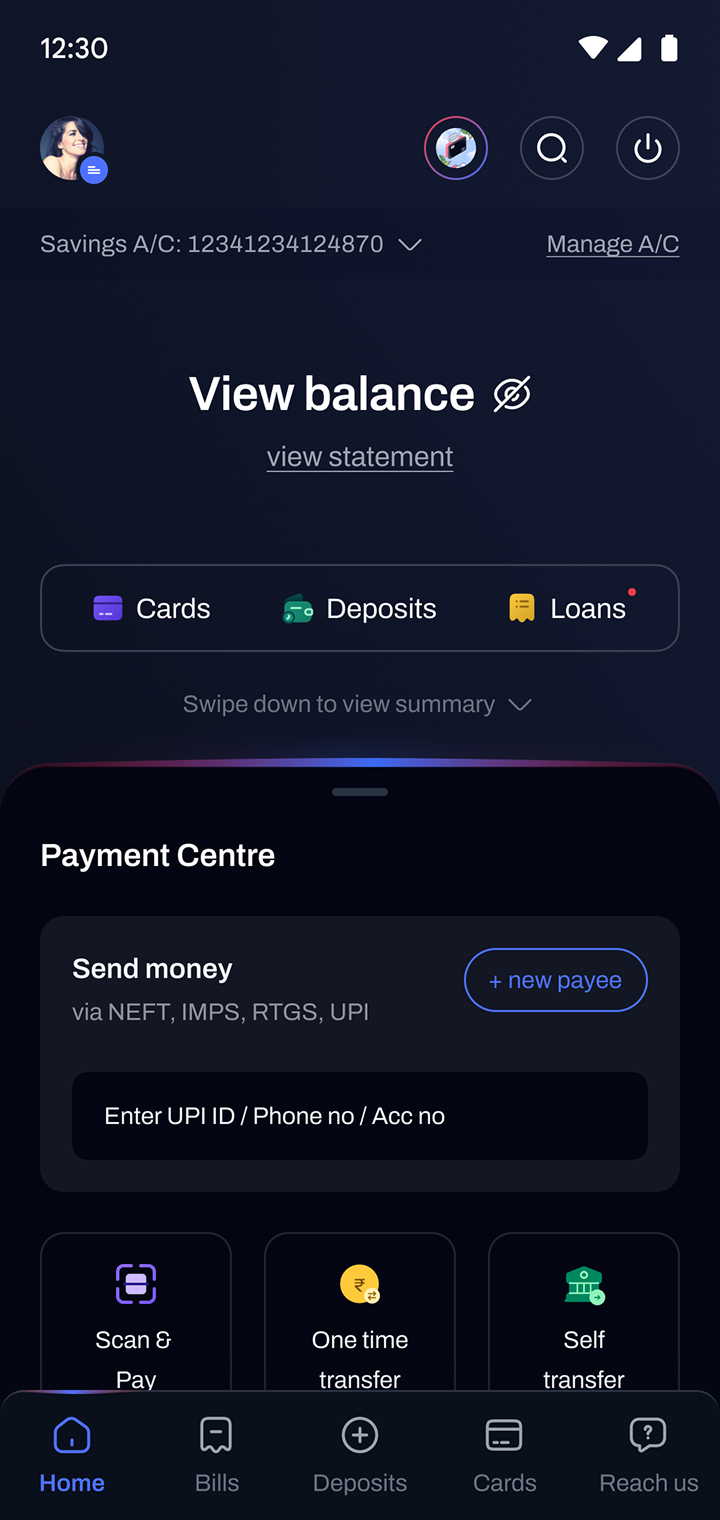
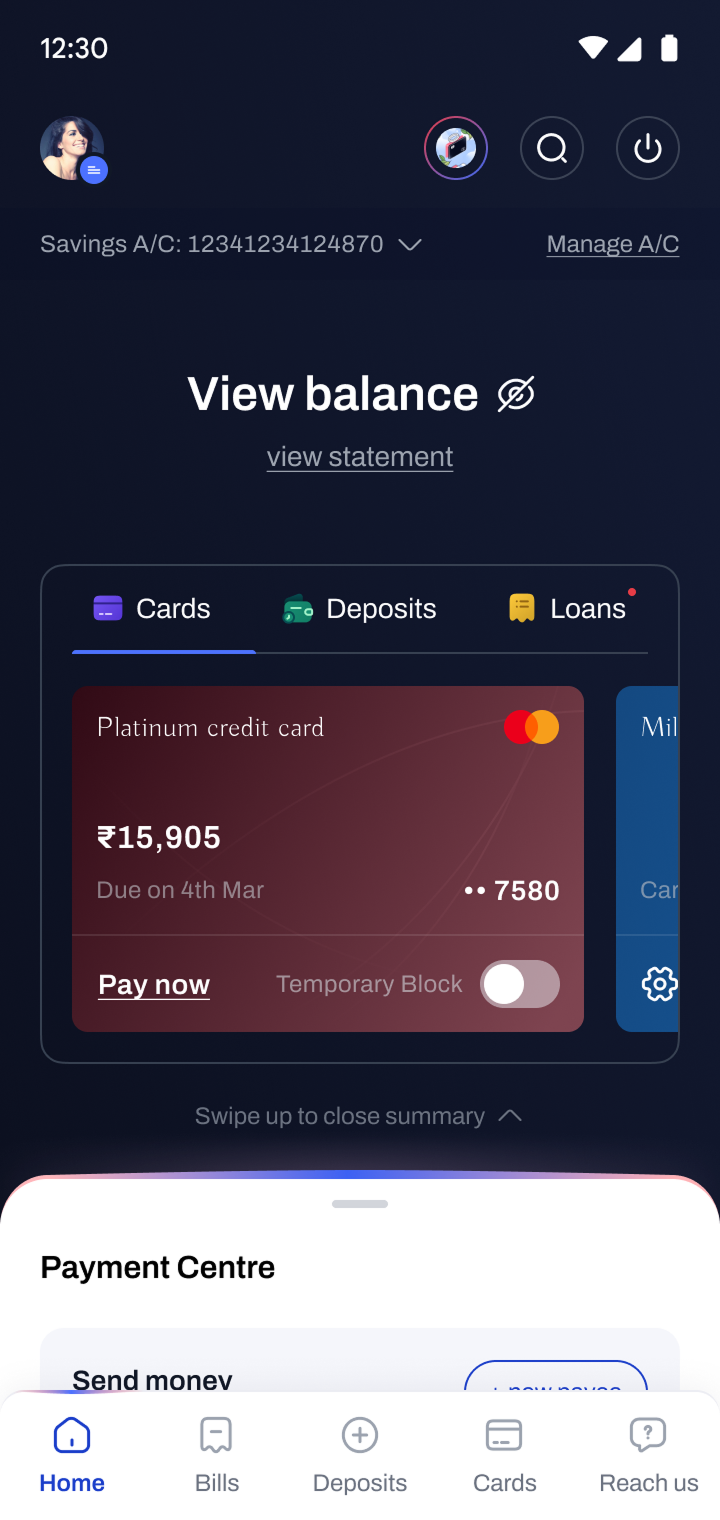
Cards, Deposits, and Loans are HDFC Bank's key revenue drivers. We gave them prime screen real estate with custom icons to draw attention. Deposits and cards are also accessible from the bottom navigation — never more than one tap away.
Business Intent
- Product Adoption Rate (Cards, Loans, Deposits)
- Conversion Rate
- Revenue per User (ARPU)
-
Decision 02
Unified payment component
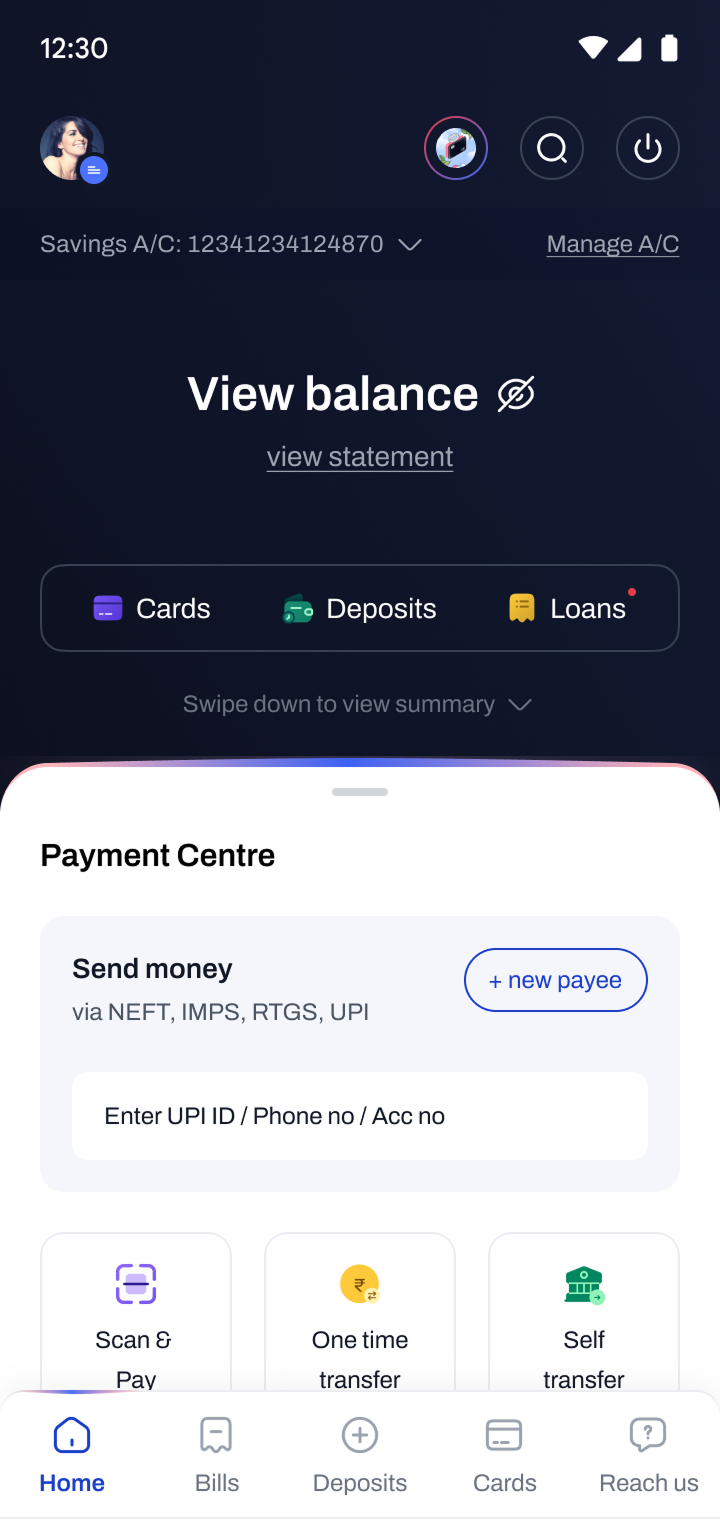
Payments were scattered across multiple entry points, creating friction and confusion. We consolidated all payment actions into a single, consistent component — reducing cognitive load and improving discoverability of core transaction flows.
Business Intent
- Transaction Completion Rate
- Time to Complete Transaction
- Transactions per User (TPU)
-
Decision 03
Account balance hidden by default
A common concern was strangers glimpsing the balance when the app was open in public. Hiding it by default was a simple but powerful change — addressing a real user anxiety and enabling more confident, everyday usage.
Business Intent
- User Trust (Perceived Security)
- App Open Rate
- User Retention D/D
-
Decision 04
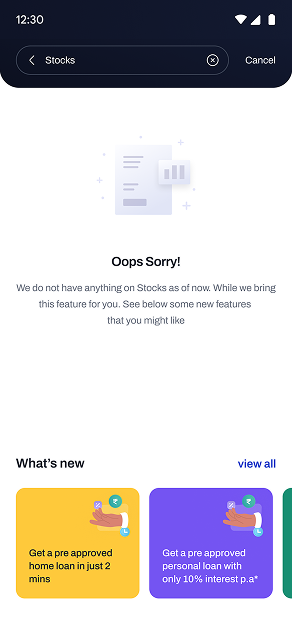
Inobtrusive ads and nudged offers
Users consistently complained about intrusive ads. We addressed this with a dedicated offers section styled like Instagram stories, accessible on demand, and strategic cross-sell nudges based on user preferences — replacing disruption with relevance.
Business Intent
- Offer Engagement Rate
- Offer Conversion Rate
- Ad Dismissal / Ignore Rate

-
Decision 05
Personalized dashboards per user segment
One dashboard couldn't serve all users effectively. We designed multiple versions — Standard, Standalone Credit Card, Standalone Loan, and Secondary Account — tailoring content and hierarchy to each profile without increasing overall complexity.
Business Intent
- Feature Engagement Rate (Segment-wise)
- Session Depth (Features per Session)
- User Retention (Segment-wise)
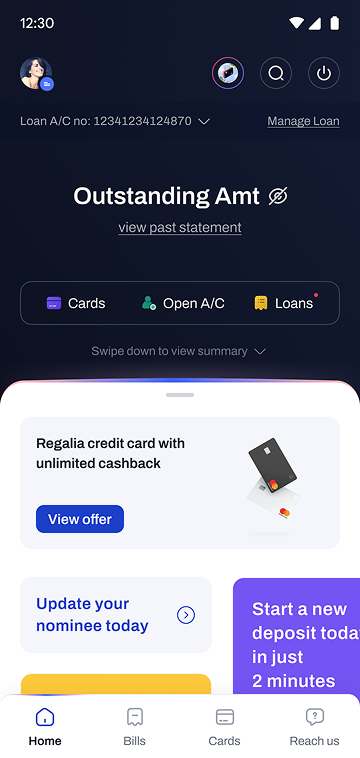
Standalone Loan 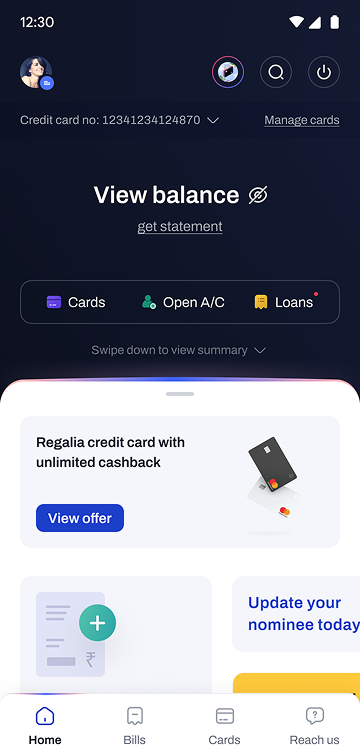
Standalone CC

-
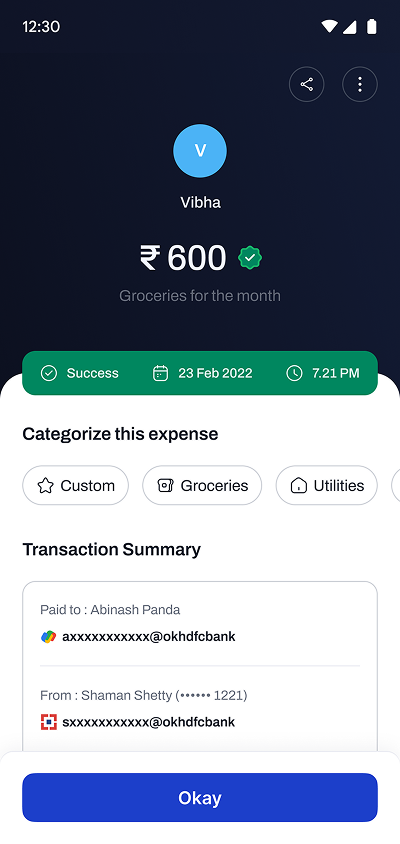
Decision 01
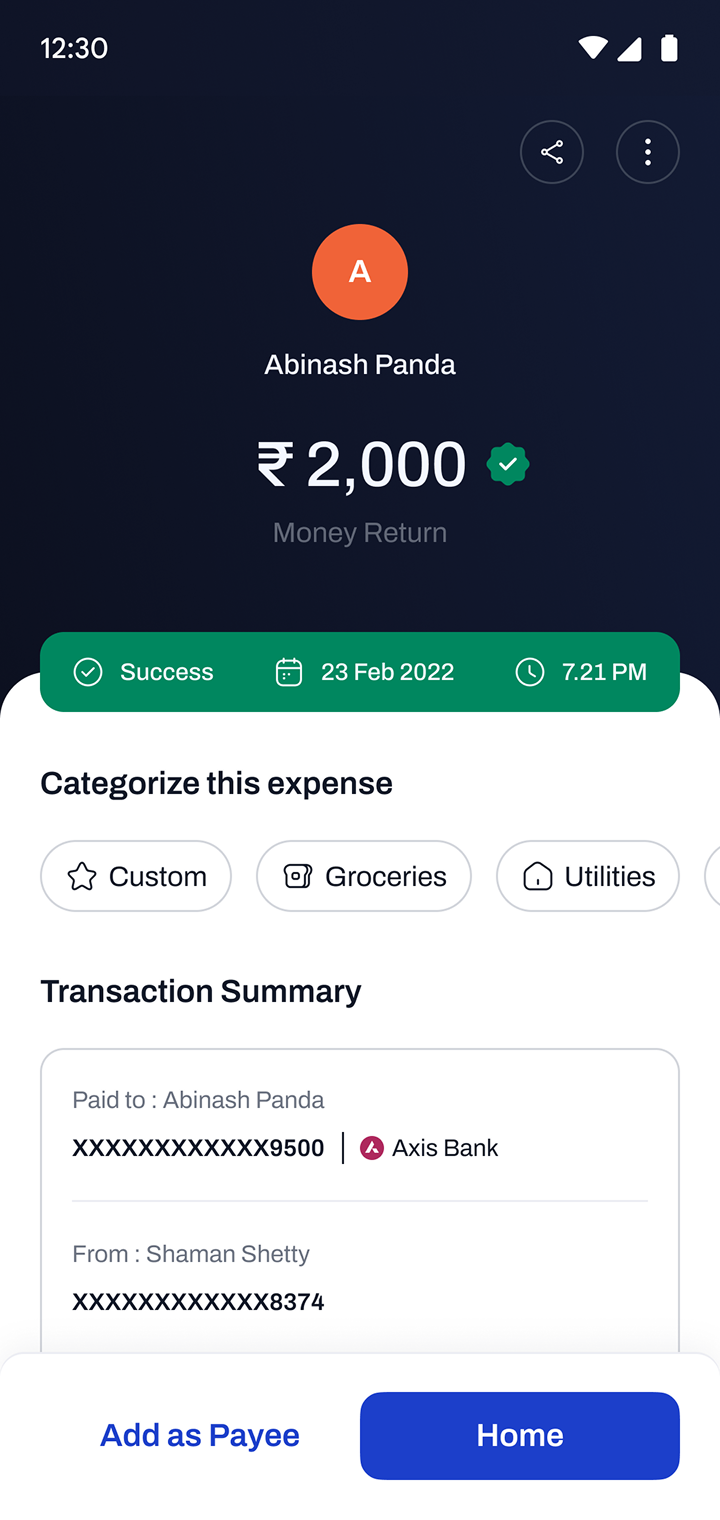
Overhauled transaction summary
The existing summary lacked hierarchy and was cluttered, making it hard to understand status or take follow-up action. We improved hierarchy, used colour to distinguish success, failure, and pending states, introduced transaction categories, and made sharing send a screenshot automatically.
Business Intent
- Transaction Review Engagement (Views / Time Spent)
- Follow-up Actions
- Transaction Support Queries
-
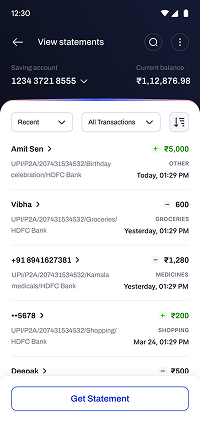
Decision 02
Powerful yet simple bank statement
The existing app had no way to download statements. We introduced downloadable statements with powerful filters and search — by user-created categories, by sent or received direction, and by transaction method (UPI, NEFT, RTGS) — letting users find what they needed without support.
Business Intent
- Statement Download Rate
- Search and Filter Usage Rate
- Support Queries (Statement-related)
-
Decision 03
Reducing friction in beneficiary and payment entry
Manual entry of cheque or beneficiary details is error-prone and time-consuming — especially for high-value transfers. We introduced faster, more reliable input methods to reduce errors and build confidence at the point of commitment.
Business Intent
- Transaction Completion Rate
- Input Error Rate
- Time to Complete Transfer


Design System
Building a scalable foundation for consistency and speed
We built an atomic design system from the ground up — covering tokens, components, and interaction states — to ensure every screen felt cohesive and could be built faster across the team.
-
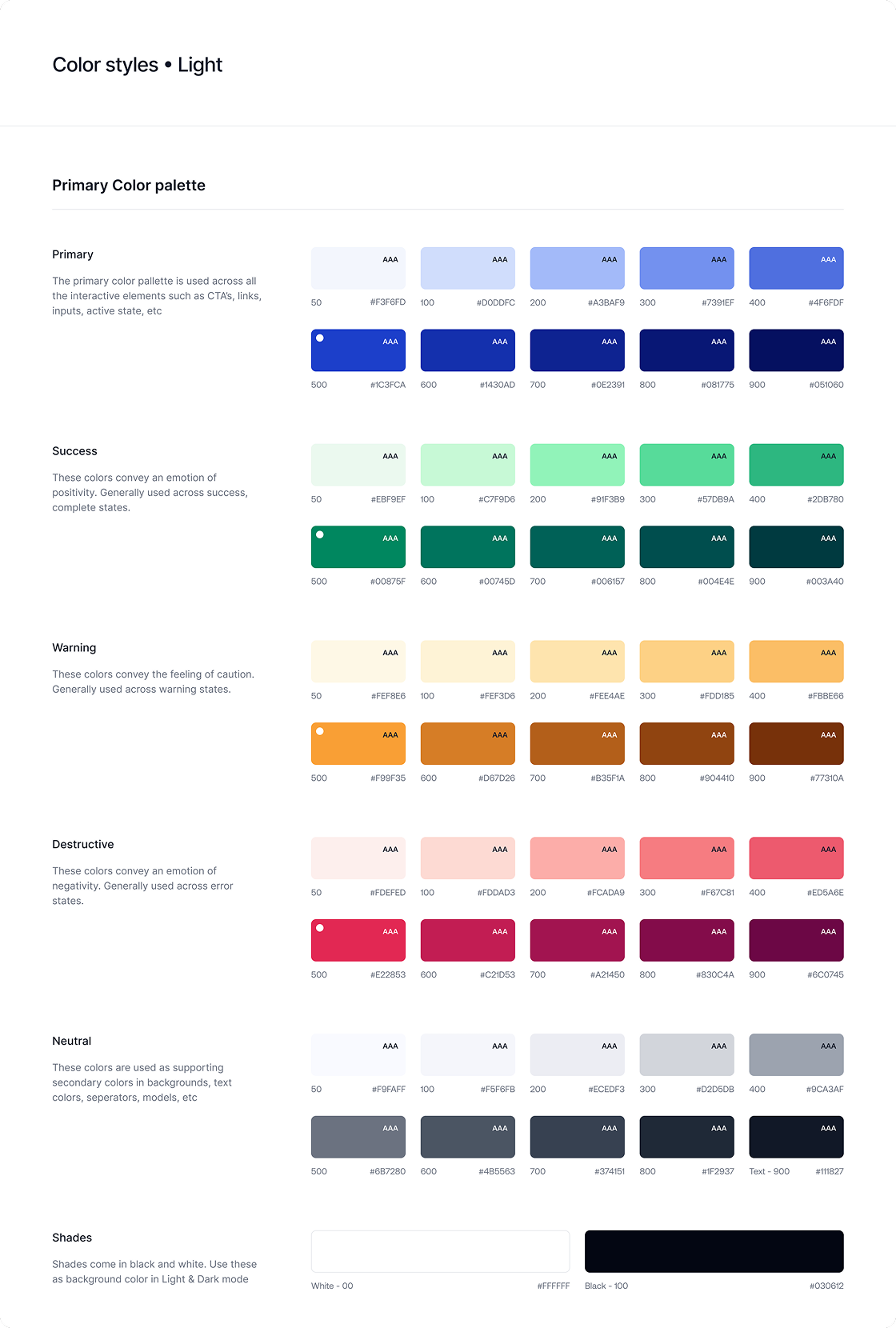
Atom / Colours — Light
-
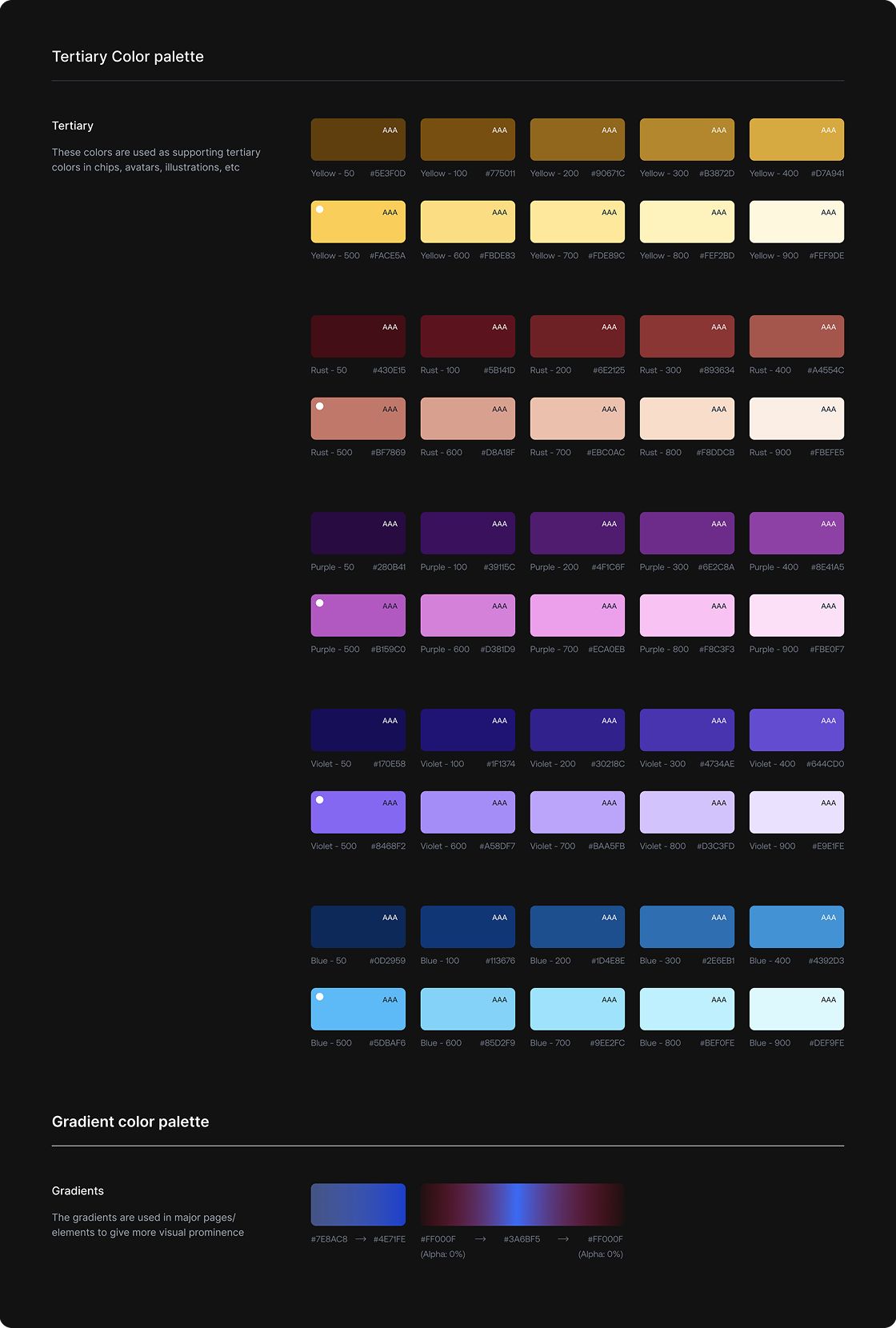
Atom / Colours — Dark

-
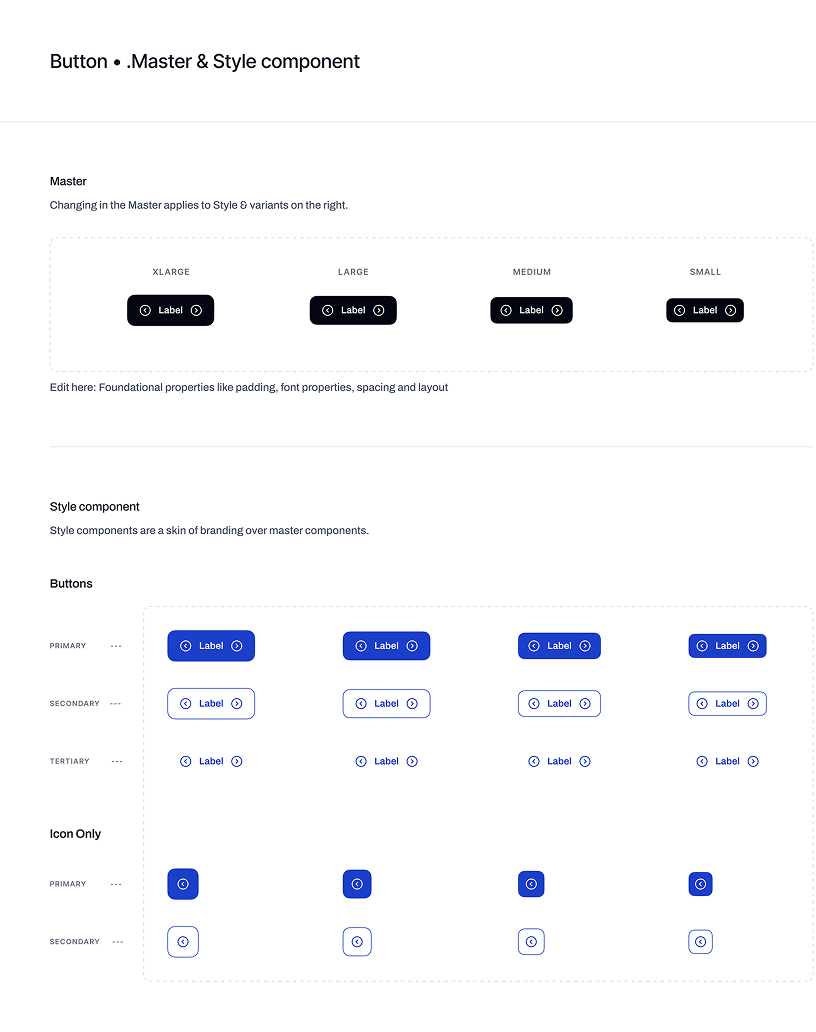
Molecule / Button — Master Component
-
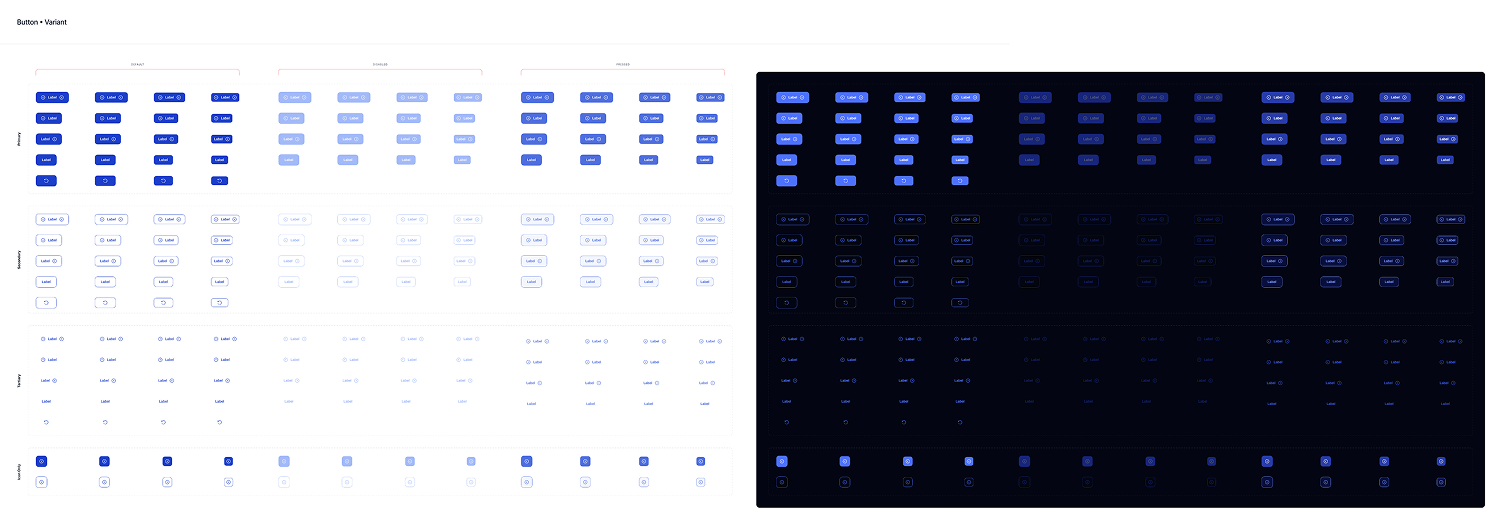
Molecule / Button — Variants
-
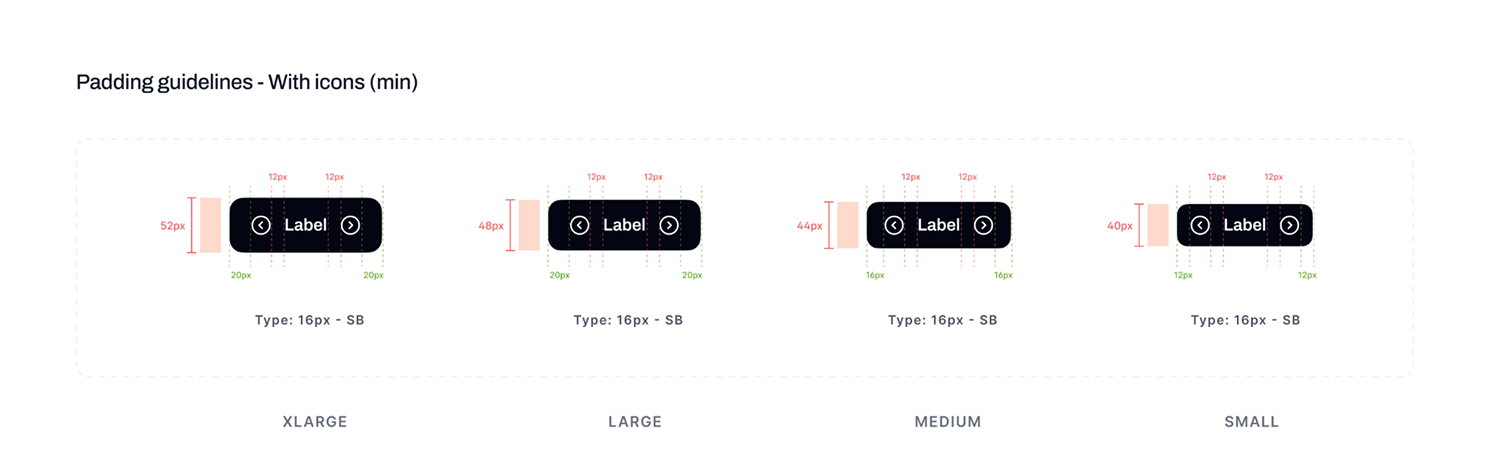
Molecule / Button — Redlines
-
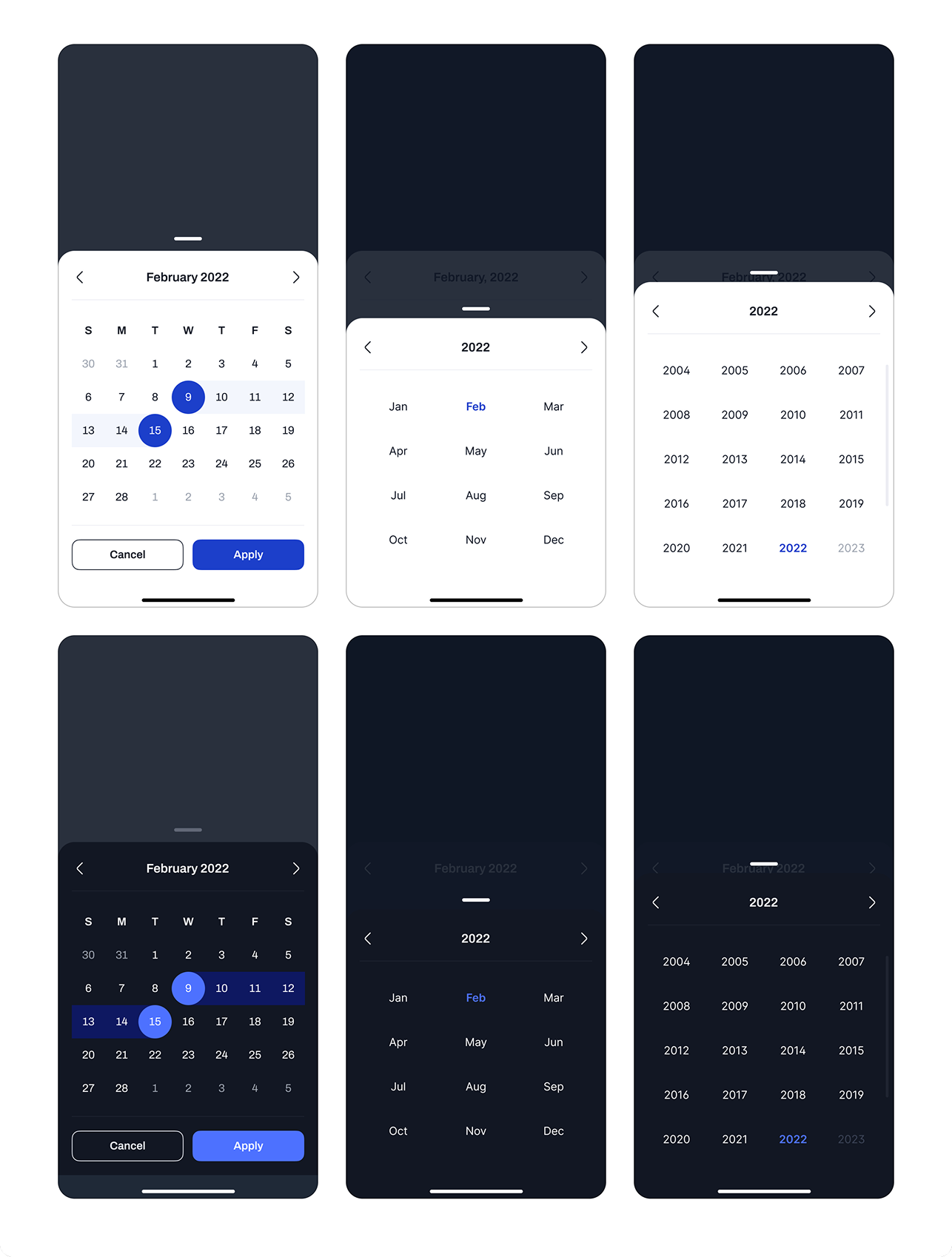
Organism / Date Picker
-
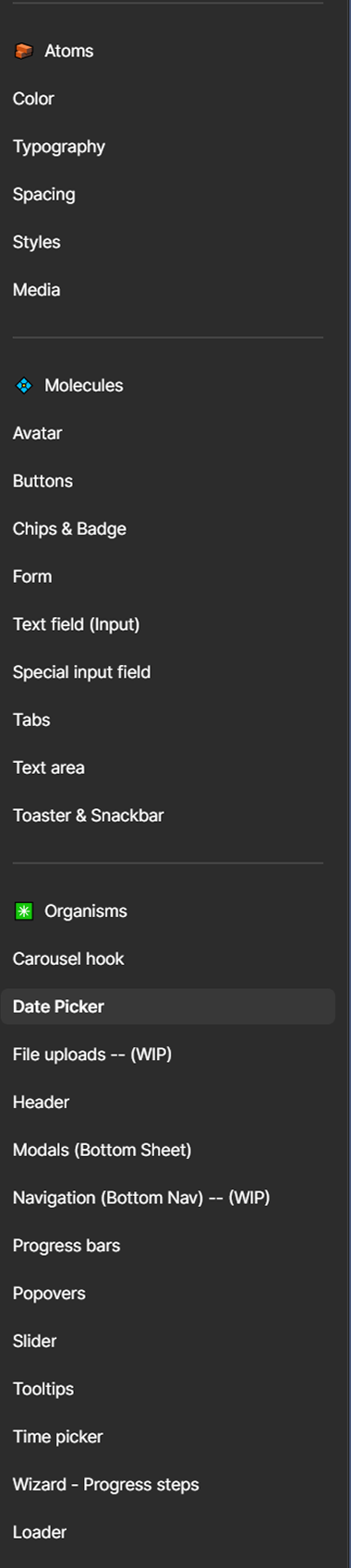
List of Components
The system reduced design time by 50% and is now in use across multiple HDFC Bank products beyond the mobile app.
Testing & Validation
Validating usability across real-world scenarios
We conducted scenario-based usability testing to evaluate how effectively users could complete key banking tasks across onboarding, transactions, and account management. The study focused on identifying friction in critical journeys, validating core design decisions, and uncovering gaps in user understanding that could impact activation and long-term engagement.
Study Setup
Testing across 46 users to evaluate real-world task success and usability
We tested with users across Tier 1, 2, and 3 cities, including both existing and new HDFC users to capture diverse mental models.
Evaluation focused on task success, time to complete flows, ease of navigation, and user confidence.
Scenarios were designed around real banking actions such as onboarding, payments, and statements—ensuring insights reflected actual usage rather than guided behaviour.
Key Insights
Identifying critical gaps in onboarding, trust, and feature discoverability
Testing revealed strong usability in familiar, structured flows, but highlighted key gaps impacting conversion and trust:
-
Onboarding clarity issues
Users struggled with system-driven terminology and unclear messaging in early steps.
-
Convenience over security behaviour
Users preferred low-effort options like OTP, indicating friction in more secure methods.
-
Discoverability gaps in key actions
While primary actions were intuitive, flows like money transfer lacked clear entry points.
-
Cognitive overload in decision-heavy flows
Multiple options and unclear labels increased hesitation, especially for low-confidence users.
-
Strong performance in structured journeys
Flows like account statements aligned well with user expectations and showed high task success.
Validation
Clarifying what works at scale and what limits adoption
The study helped distinguish between:
-
What works well at scale:
Clear hierarchy, familiar patterns, and high-frequency actions supported strong usability.
-
What limits adoption:
Gaps in onboarding clarity, decision overload, and feature discoverability created friction in critical journeys.
These findings directly informed decisions to simplify flows, improve clarity, and better align the experience with user expectations.
Process Artefacts
From live testing sessions to documented findings
-
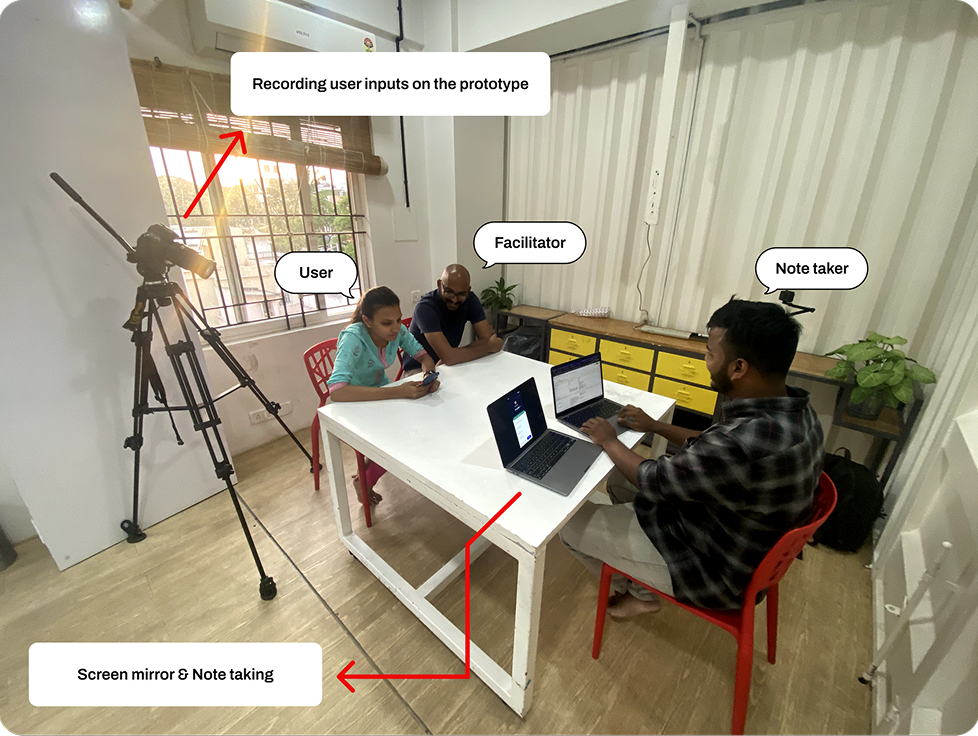
Offline Usability Testing Setup
-
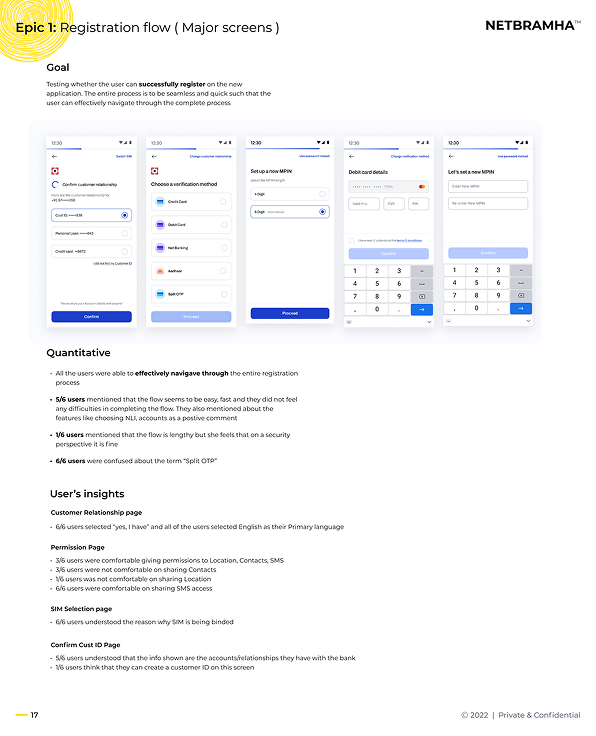
Usability Testing Report
-
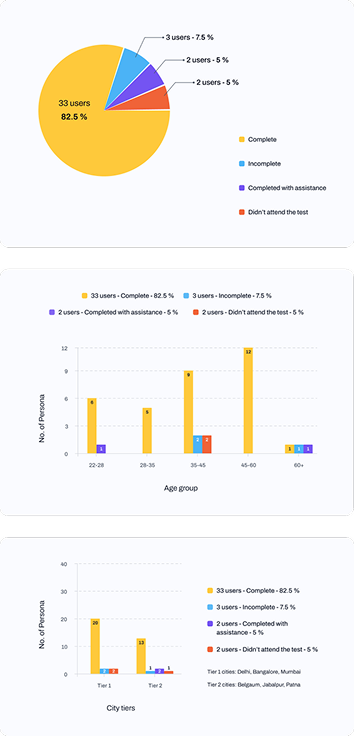
Charts from Report
Impact
Driving activation, transaction success, and feature adoption across core journeys
The redesign focused on improving usability across onboarding, transactions, and account management—directly influencing activation, task completion, and adoption of key financial actions. By addressing gaps in clarity, trust, and discoverability, the experience was made more intuitive, scalable, and aligned with user behaviour.
-
100%
Successful navigation of the onboarding flow, demonstrating low friction in a high-risk activation journey after simplifying key steps.
-
~97%
Completion rate in money transfer tasks, validating improved learnability while highlighting opportunities to further enhance intuitiveness.
-
~82%
Task success rate for statement generation without assistance, indicating strong alignment with user expectations in structured flows.
-
Behavioral insights beyond UI
Generated deeper product insights around trust, security perception, and transaction behaviour, informing decisions such as simplifying authentication choices and improving communication around sensitive actions.
-
Reduced cognitive load across journeys
Eliminating redundant steps, unnecessary decisions, and unclear labels improved user confidence and reduced hesitation in onboarding, payments, and account management.
-
Improved discoverability of key actions
Clearer entry points and better information hierarchy increased visibility of critical features such as transactions, statements, and filters—driving higher likelihood of feature adoption.
-
Mitigated activation risks through clarity improvements
Simplifying system messaging and aligning terminology with user mental models reduced confusion in early onboarding steps—strengthening trust and improving readiness to proceed.
Social Proof
External validation from users, industry peers, and market adoption
The redesigned experience was not only validated through usability testing but also received strong positive signals from users and industry professionals. Feedback highlighted improvements in clarity, usability, and overall product direction—reinforcing the impact of the design decisions at scale.

Final Designs
Validated design solutions ready for scale
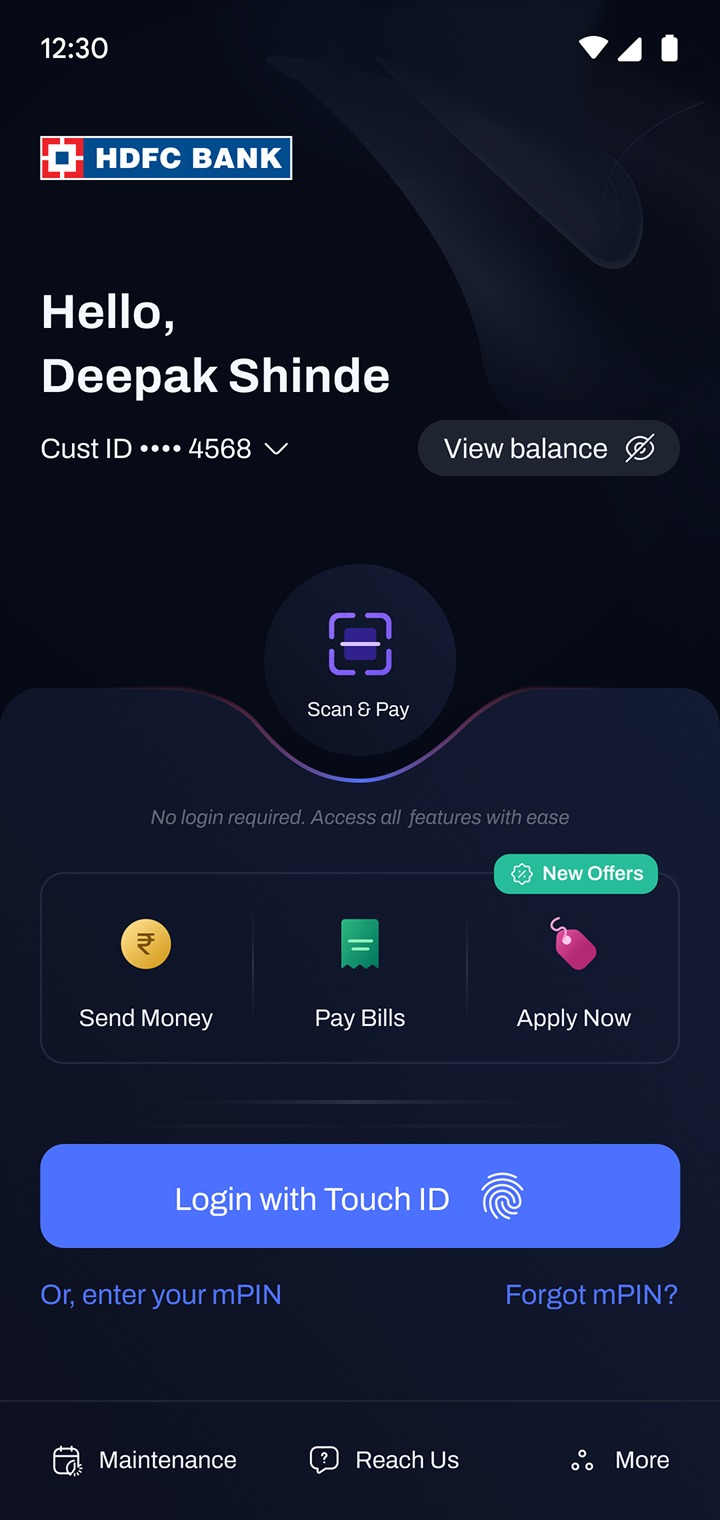
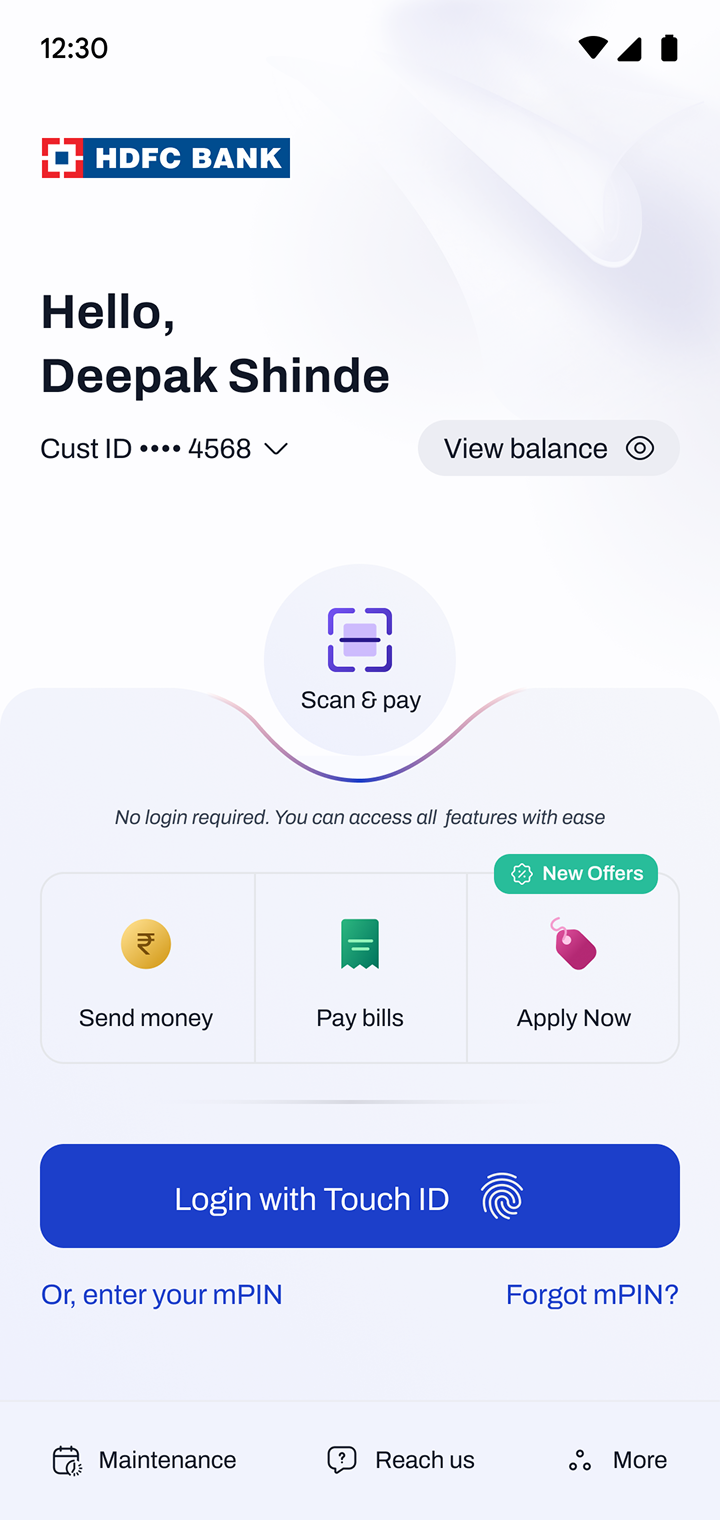
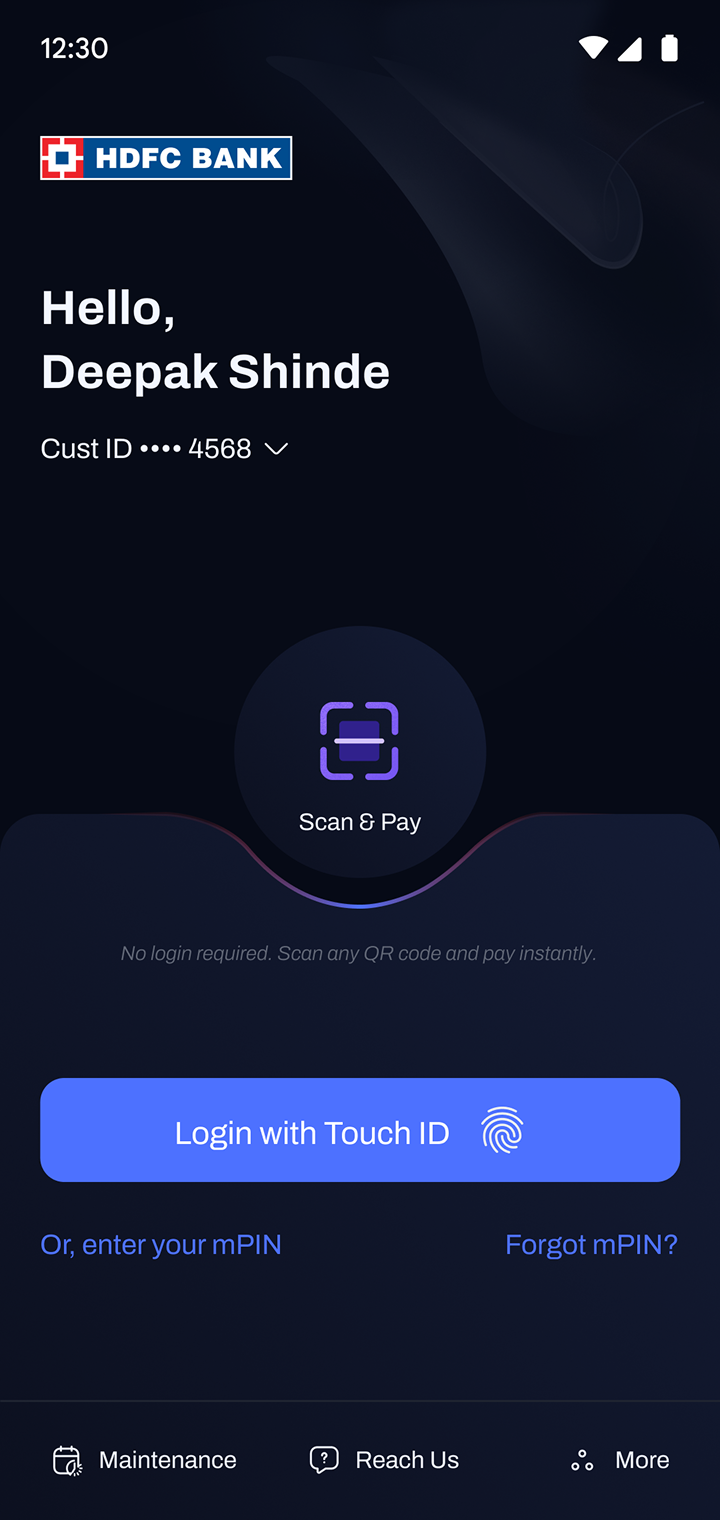
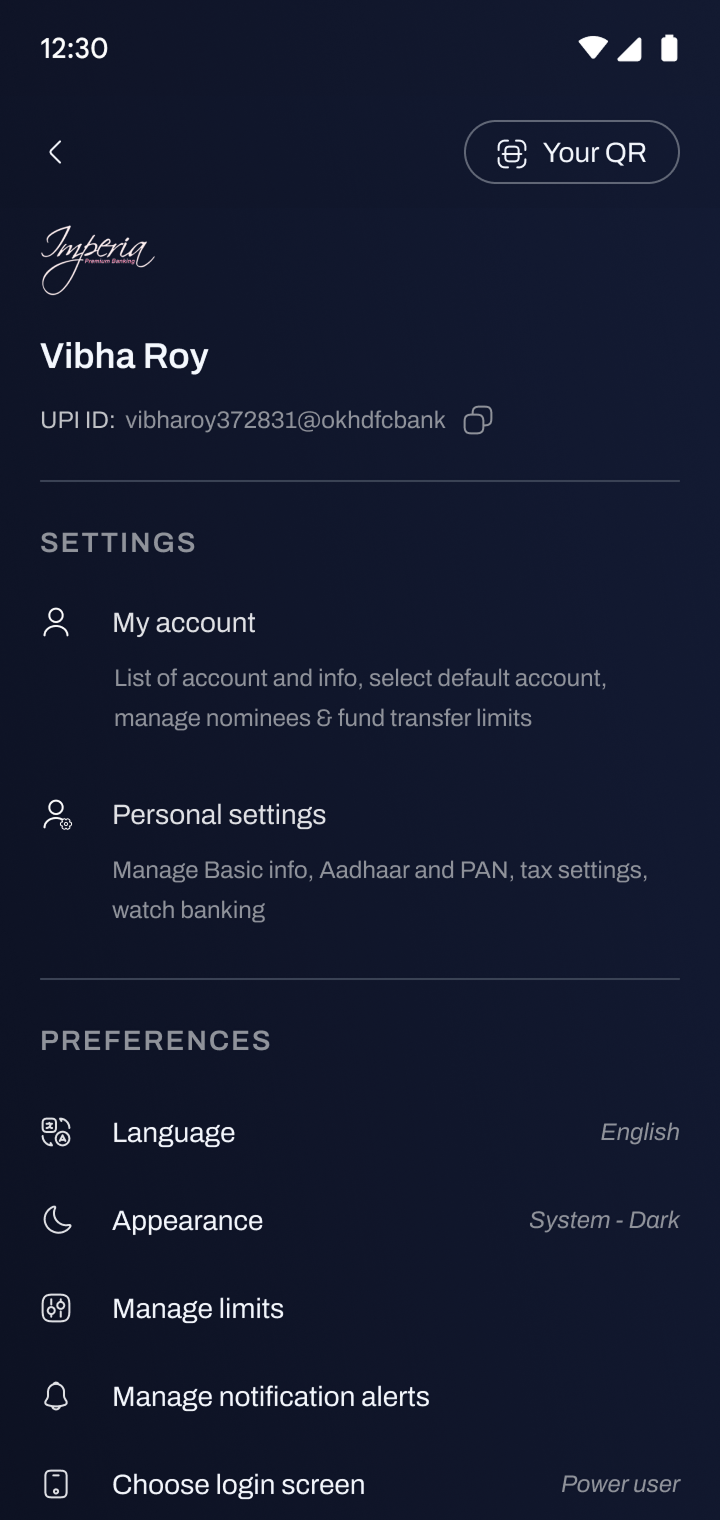
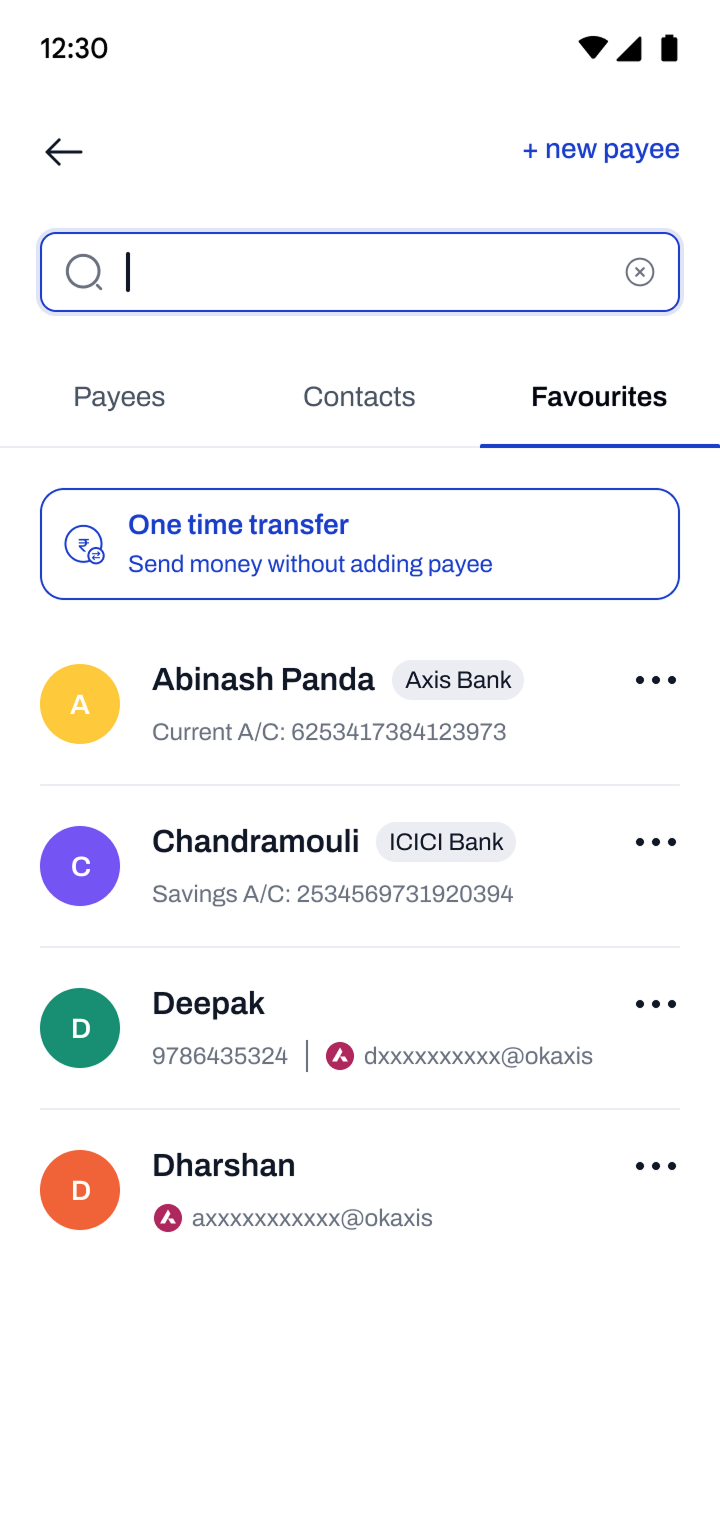
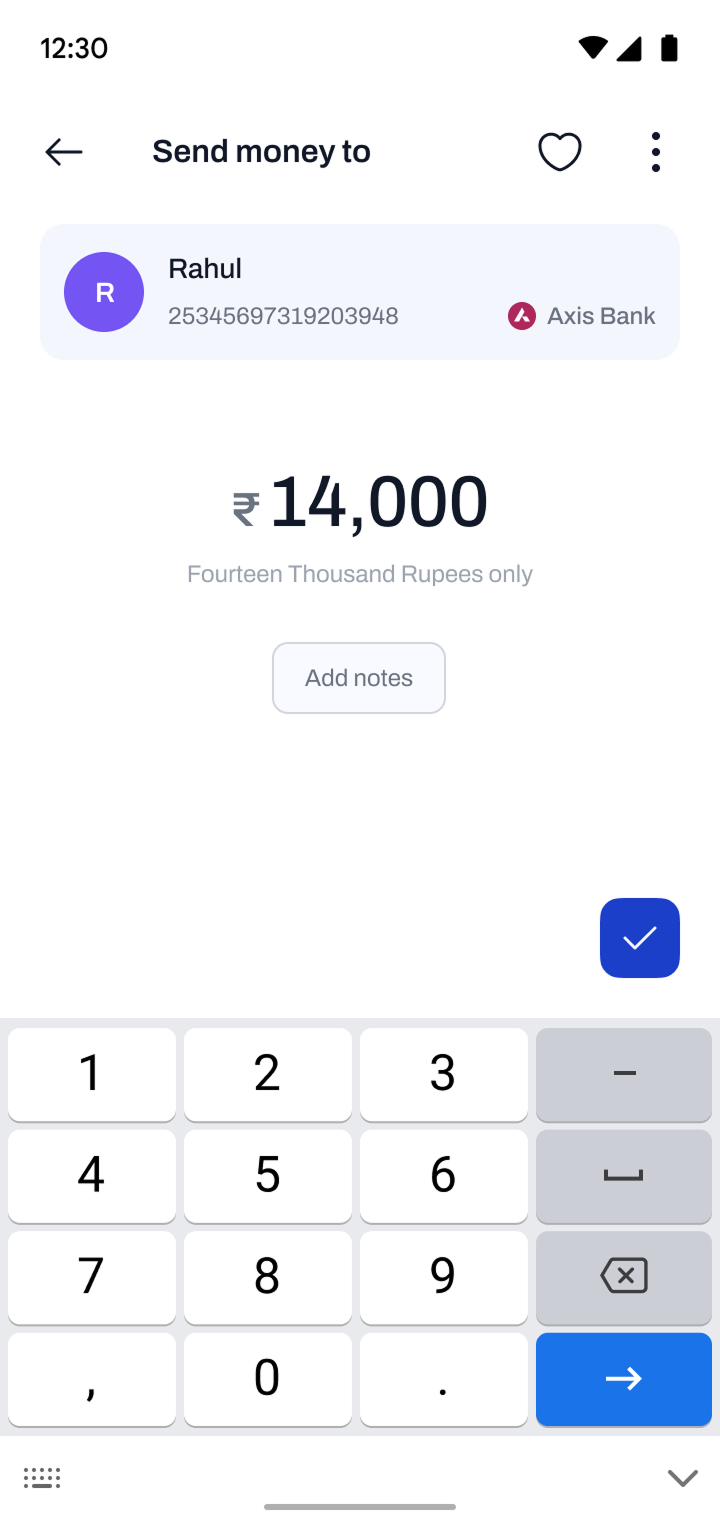
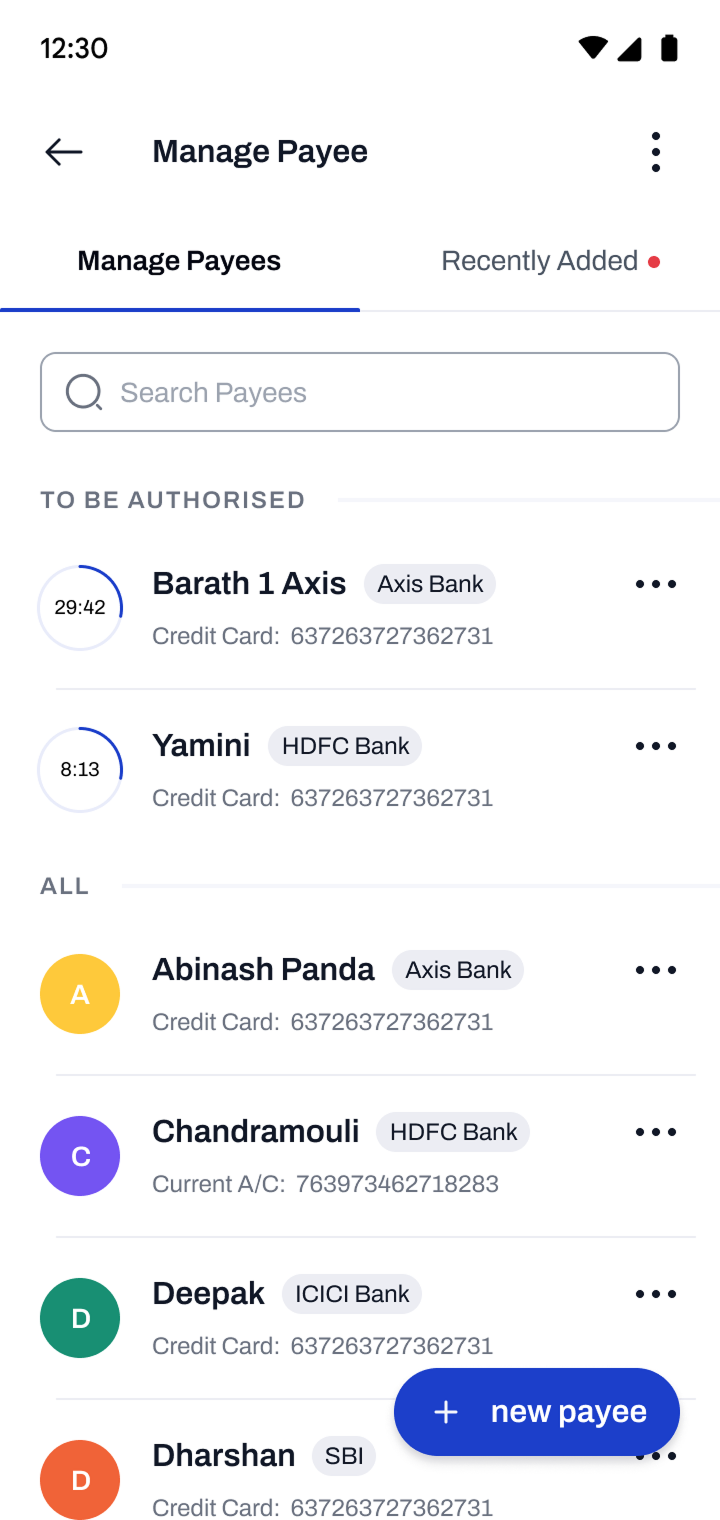
Dashboard Prototype
Registration Prototype